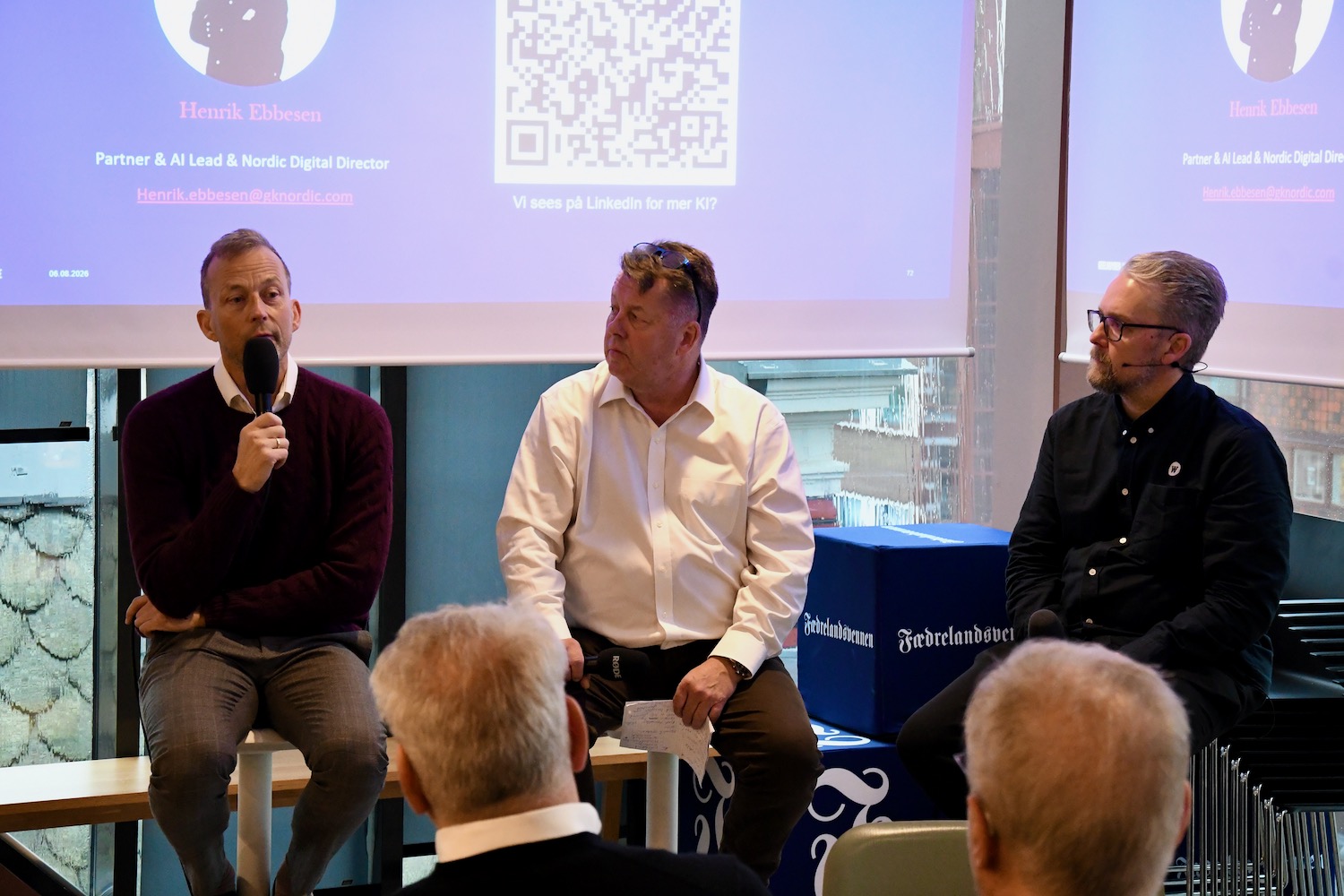
“Businesses must rethink digital visibility as AI-powered search rapidly changes how people discover information online,” said Ebbesen, Nordic AI Lead at communication company GK.
Traditional search behavior is shifting. Instead of clicking through pages of Google results, users increasingly ask ChatGPT, Copilot, Perplexity, Gemini and other AI assistants for direct answers. As a result, organic traffic from search engines is declining.
“People rely on the AI summary when searching. For businesses, the question is no longer whether customers can find you. The question is what AI says about you when they do,” said Ebbesen.
To address this challenge, Ebbesen advocates Generative Engine Optimization (GEO), focused on ensuring AI systems understand, reference and accurately represent a brand. While Search Engine Optimization (SEO) was designed to generate traffic, GEO is about generating mentions, citations and trusted recommendations inside AI-generated answers.

According to Ebbesen, successful GEO requires organizations to manage three sources of influence: what the company says about itself, what experts and media say about it, and what customers discuss in social and community channels.
On the company side, structured content, clear statistics, expert quotes and schema markup can significantly improve AI visibility. Earned media remains equally important, as repeated mentions in trusted publications help AI models associate brands with specific topics and expertise. Community platforms such as LinkedIn, Reddit and Quora are also becoming increasingly influential as AI systems incorporate content from both professional and user-driven discussions.

Ebbesen recommends a structured approach: establish baseline monitoring, build an AI search strategy, optimize digital assets, and continuously track performance.
“Succeeding in AI search is not a marketing project alone. ‘It takes a village.’ AI visibility must be treated as a strategic responsibility across the entire organization,” said Ebbesen.